Showing posts with label pico-8. Show all posts

Wednesday, 28 June 2017

Pico Breed (PICO-8)


Back in the mid-nineties, one of the deciding factors that persuaded me to 'upgrade' from an Atari ST to an Amiga was playing a little budget game called Alien Breed (Special Edition) by up and coming studio Team 17. I'd cycled 4 miles on my BMX to a friend's house in the next village to check out his new Amiga 600, and after initially laughing at it's childish form-factor I was soon taken aback by the quality of the games on the thing compared to my trusty old Atari.

Looking back, Team 17 certainly had some balls in releasing Alien Breed. The follow up games swapped the xenomorph-lookalikes and face-huggers for more generic/non-copyright-infringing sprites, but that original game captured the pure essence of James Cameron's Aliens. It was unlike any other top-down exploratory shoot-em up of the time; your bulky marine felt slow and vulnerable, there was a constant feeling of dread and the scarcity of ammo and keycards forced you to constantly weigh up your options and make difficult decisions. The endless waves of xenomorphs meant that getting lost or taking a wrong turn could have dire consequences - and when that self destruct sequence countdown started... well, you just knew you were in the shit.

20th Century Fox missed out. They could have put an official seal of approval on the thing and Alien Breed would have been the best Alien home computer game ever. It really is a classic, and a game that I've yet to find a modern counterpart that successfully captures the same feelings.

Until today.

Who would have thought that it would have been an Alien Breed 'tribute' on the humble Pico 8 that almost got it right, causing those happy memories to come flooding back? But yet here we have Pico Breed, a game by a developer who has quite clearly been touched by memories of the 'Breed' in a similar way to yours truly. And damn, those teeny weeny alien sprites are almost too cute to kill.


Of course, being a Pico 8 port, there's been some cuts. There's only one short level, and aside from the three-headed queen there's a grand total of two alien types; predictably full grown 'xenos' and little facehuggers than spawn from eggs. Thankfully your stereotypical marine-tough-guy can take a huge amount of damage before kicking the bucket, and if you act smart and target the alien spawn points first then you'll find there's enough ammo to last for days.

Progress is made through this top-down shoot-em-up via the collection of key cards and hacking of terminals to open doors and sealed bulkheads. The layout of the stricken spacecraft is typically Alien-Breed-ish; i.e the architects were clearly on some heavyweight recreational narcotics when they came up with the layout and had no regard for common sense or health and safety. There are dead-ends and maze-like ventilation shafts a-plenty, key cards kept safely behind locked doors and ammo lying about in the most unlikely of places. At least on this version there's no self-destruct sequence with barely enough time to escape and tons of hurty-hurty one-way electric gates. What kind of sicko space-engineer came up with the idea for those anyway?

Surprisingly Pico Breed has also nailed the sound of Alien Breed too. There's an ominous background hum, the doors open with a lo-fi "swish" and the explosions and gunfire are suitably punchy. Even the alien death-throe chirrups are as perfect as you can get with the Pico 8 limitations. In addition to this, the starfield zipping by in the background gives a feeling of speed and urgency that Alien Breed never managed; there's a genuine sense of panic as the starship full of alien scum hurtles towards Earth.

There have been a few complaints on the BBS that the game is too hard, but I guess they are missing the fact that the spawning points can be disabled, or perhaps they missed the weapon upgrade? Not meaning to sound as though I'm bragging, I found the game pretty easy - I think it took all of two or three goes to successfully reach the end. But hell, it was a blast to do so and thanks to the speed-run timer I'm tempted to give it another shot. Gabriel Crowe, I salute you.

Download/Play the the game here (from the PICO-8 BBS).
Run it using PICO-8 (Commercial).
4 out of 5

Friday, 19 May 2017

An Introduction to the PICO 8


Hey there! I've got a day off work today, so whilst I wait for various parcels full of C64 goodness to arrive I thought that I'd tap away on the keyboard about my recently discovered love for Lexaloffle's 'fantasy console' - the PICO 8. But first, a bit of history...

My first home computer was the humble BBC Micro, way back when I was about six or seven years old. I don't remember much about it other than extensively playing some educational software in which you had to build robots on a factory assembly line by answering simple arithmetic sums. Get it correct, and all the limbs were put in the right place. Conversely, deliberately getting the answers wrong was far more satisfying, resulting in the creation of legions of broken robots with legs instead of arms and heads.

This is my first memory of computing. Deliberately playing educational games wrong.

Fast forward a few years, and I receive a 128K ZX Spectrum for my ninth or tenth birthday. It was the black 'Amstrad' model with the tape drive included inside the main chassis. This came with a collection of tapes that allegedly included over 100 games - most of which were admittedly quite poor. But hey, there was fun to be found in searching through those cassettes for the rare, hidden gem - such as Mastertronic's 'Rescue'.

By now I'd started buying computer games myself (with rather limited pocket money), and I'd began to learn about the different games that were available for the variety of different computers available at the time. As far as my parents were concerned, computers were an educational toy, but despite their best efforts at encouraging me to learn BASIC, for me it was all about the games.

An Atari ST, an Amiga and dozens of PCs later, this same feeling hasn't changed. It's the library of games, especially exclusives, that attracts me to a platform over anything else. So it should come as no surprise that it was the initially the games that influenced me to put down my $15 for a PICO 8 licence.


Much like the ZX Spectrum and Commodore 64, the PICO 8 wasn't designed primarily as a platform to simply 'play' games on. Instead, it was designed as a creative tool; a modern day, 8-Bit computer on which the user can build all aspects of a game (or other software) from within a single, integrated development environment. Much has already been written about the innovative design of Lexaloffle's undisputed opus; the cross platform support, the distribution of games within small .png 'cartridge' images, the well thought-out interface and LUA script-based programming language, and of course, the fact that all software developed on it is open source and editable.

But, I'll be frank; none of that really excites me. What does gets my juices flowing, however, is that this zany little 'virtual' computer features a whole load of exclusive, cute little games created by a community of both newcomers and well-established indie developers and artists.

Of course, 8-Bit game development isn't a new phenomenon. The ZX Spectrum, Commodore 64, Atari 800 and even Amstrad CPC homebrew gaming scenes are still active, with dozens of new games released over the past few years for these vintage machines. However, the rate at which the PICO 8 library has grown over the same period is quite astonishing - especially when you consider that it isn't actually a real-life, physical computer that you can actually buy. Or so you might initially think.


In a way, the PICO 8 has already seen a couple of official 'physical' releases; the Chip and Pocket Chip both come with a PICO 8 licence and the software pre-installed. However, if you have a Raspberry pi sitting around in a drawer then you can actually make your own dedicated PICO 8 machine yourself. This rather excellent guide by gamaral explains how to do it (the process of preparing the card takes all of five minutes).

If you've not got a Raspberry Pi, then visit a site such as the Pi Hut and grab one. You'll need the following for the ultimate PICOPi experience:

  • A Raspberry Pi (ideally revision 2 or three), power supply and video lead (~£40).
  • A case for it (~£6).
  • A USB keyboard and mouse (you have these already, surely?)
  • At least one USB gamepad (some games support up to 4 players). Xbox 360 style pads work fine, or you can go retro if you prefer (~£5-£30).
  • A Micro SD card. PICO 8 requires a tiny amount of space, so if you have a spare small-capacity card, that'll do just fine (~£9).
  • A PICO 8 licence ($15).

(Of course, if you don't have any of this stuff then there are bundles available for this sort of project, like this one for £65). In all, you end up with a fully functional computer system for less than £100 that you can play and develop games on. And if you want a break from PICO 8, then you can simply pop in another SD card with another OS or setup on it. It's awesome.


After refitting a spare Pi here with PICO 8 and seeing my kids have a crazy amount of fun with it, I realised that this fantasy console really was the modern day equivalent of those home computers my generation grew up with. It's so simple; plug it in and they are playing games in seconds. With it's in-built, joypad controlled game browser, even my youngest can find his favourites with ease.

Sure, with only 32KB set aside in the header of a .png file to hold all the game data, most releases on the PICO 8 are quite basic, but there are enough notable exceptions to make it worth investigating further. As with our own 16KB cartridge game compo, the strict limitations of the PICO 8 have resulted in some incredible achievements, way beyond the scope of what was initially thought possible.


So, now my two boys have one to share, tucked away under the TV in the lounge, and my daughter has her own one which I am hoping she'll learn to program on herself (thanks to a recent Kickstarter project). Hell, even I am tempted to tap out a few lines of code on the thing.

Anyway, enough of the hard sell. What I've been getting to here of course is that as there's so much cool stuff coming out on the PICO 8, I'm genuinely excited about sharing some of my favourites with you. So, as RGCD slowly picks up momentum again, I'll be dropping occasional news and reviews here for what is fast-becoming one of my favourite retro platforms.

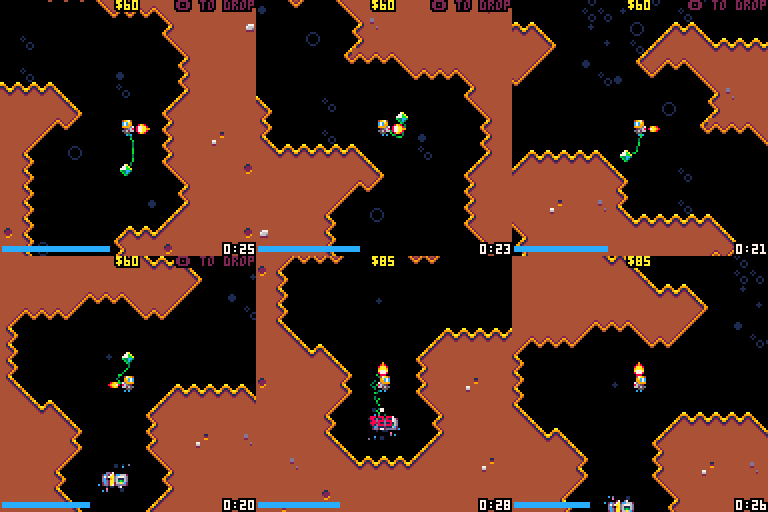
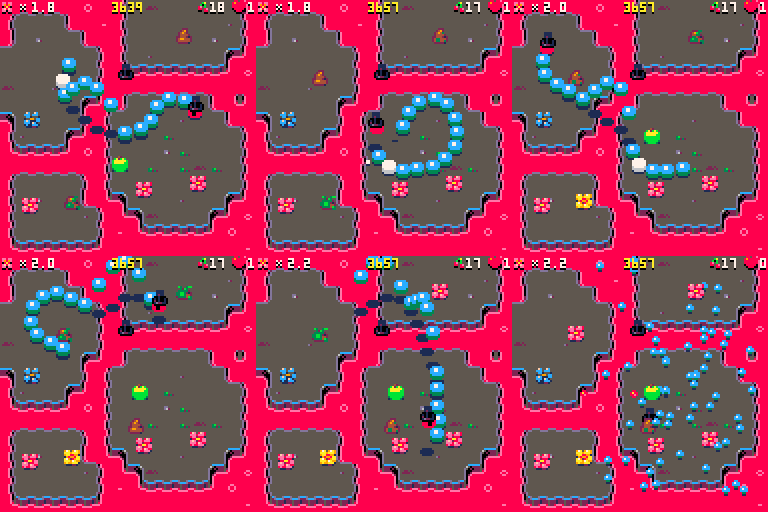
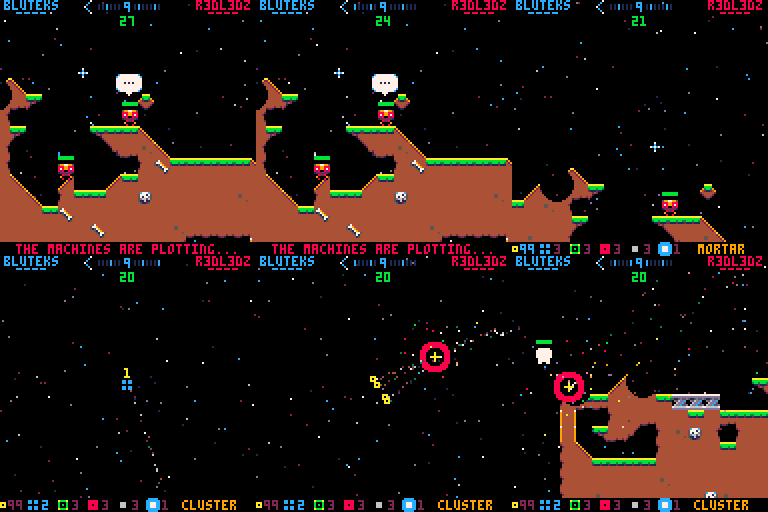
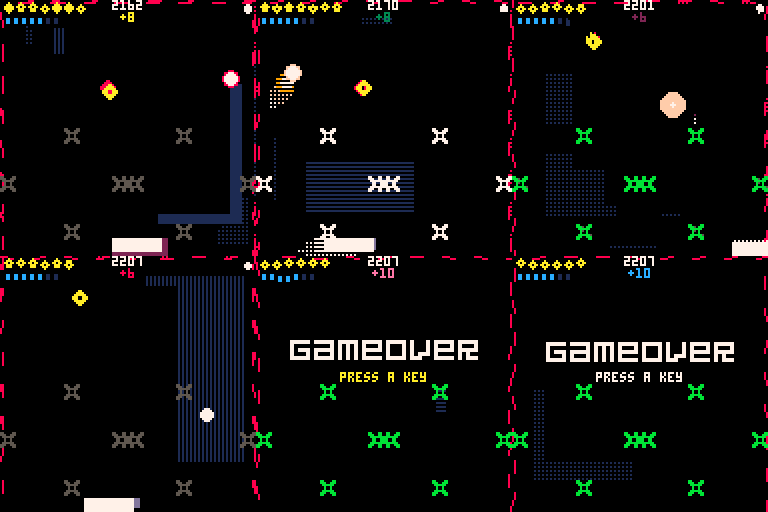
In the meantime, have a go at some of these as way of an introduction (all playable within a browser via the PICO 8 BBS!)


More news soon!